A gentle guide to an old way of seeing, and to stories that let you try it from the inside.
Maybe it happened on a morning walk. The light came through the trees at a certain angle, and for a moment nothing was missing. No thought to fix, no plan to make. Then the phone buzzed, and the moment was gone.
What was that?
People have had moments like this for thousands of years, in monasteries and kitchens, in deserts and subway cars. Some of them wrote it down. They are called mystics, and the word can sound far away, like candles and Latin and people who never had to pay a bill. It may be closer than it sounds.
This page is a small guide. It explains what mysticism means, where the idea comes from, which myths get in the way, and how it might look on an ordinary Tuesday. At the end there are three novels and one spiritual book by Noah Lindholm that approach the same questions.
No background in theology is needed. Only curiosity.
What mysticism means
The word comes from the Greek mystikos, related to a verb that means “to close,” as in closing the eyes or the lips. A mystic, in this old sense, is someone who has seen something that is hard to say out loud.
In simple words: mysticism is the experience that the divine, or the deepest reality, is not only something to believe in but something to meet. Not at the top of a long staircase, but right here.
The American psychologist William James studied such experiences in The Varieties of Religious Experience (1902). He named four marks that kept showing up in the reports he collected:
Hard to put into words. People say that language falls short.
A sense of knowing. It feels less like a mood and more like insight.
Brief. It usually lasts minutes, not days.
Received, not made. It tends to arrive rather than be produced on demand.
James did not claim to settle whether these experiences are “true.” He observed that they are real for the people who have them, and that they often change how a life is lived afterward. That is a helpful place to start.
Mysticism exists in many traditions: in Christianity, in Judaism, in Sufi Islam, in Hindu and Buddhist thought. This page looks mostly at the Christian mystics of the Middle Ages, because two of the stories below take place among them, and a third begins with Giordano Bruno in 1600. The core question is shared across all of them: What if the thing we search for has been close the whole time?
A short history
Mysticism did not begin in one place, and no short page can tell its whole story. Here are a few people whose lives still speak, especially to readers who are spiritual but not religious.
Meister Eckhart (around 1260 to around 1328). A Dominican friar, teacher, and preacher in Paris, Erfurt, Strasbourg, and Cologne. He preached in German to ordinary people, not only in Latin to scholars, and he said surprising things: that God is born in the soul, that we should let go even of our ideas about God. Near the end of his life he was accused of heresy. In 1329, after his death, a papal bull condemned a list of sentences drawn from his teaching. His sermons survived anyway and are read today far beyond the church.
Marguerite Porete (died 1310). A Beguine, one of the laywomen who lived a religious life without taking vows. She wrote The Mirror of Simple Souls, a book about a soul that becomes free by wanting nothing more for itself. She refused to recant, and on June 1, 1310, she was burned in Paris. Her book went on circulating for centuries, often without her name.
Johannes Tauler (around 1300 to 1361). A Dominican preacher in Strasbourg, deeply shaped by Eckhart’s teaching. He carried it into a practical, pastoral language for people living through plague and fear.
Julian of Norwich (1343 to after 1416). An English anchoress who lived in a small cell attached to a church. After a severe illness she wrote Revelations of Divine Love, often described as the earliest surviving book in English known to be written by a woman. Her best-known line is still quoted in hospitals and on kitchen walls:
“All shall be well, and all shall be well, and all manner of thing shall be well.”
Julian of Norwich, Revelations of Divine Love
Brother Lawrence (around 1614 to 1691). A lay brother in a Paris monastery who worked in the kitchen and later mended sandals. His letters and conversations were published as The Practice of the Presence of God. His point was simple: washing a pan can be prayer, if it is done with attention and love.
Giordano Bruno (1548 to 1600). Not a mystic in the strict sense, but a philosopher who saw the divine in an infinite universe and in every living thing. He was burned in Rome on February 17, 1600, after a trial of about eight years.
What connects them? Their paths were very different. Some withdrew into a cell or a cloister, others taught, preached, or worked among their neighbors. None of them treated the sacred as something far away from ordinary life. They looked more closely at it. And several of them paid a high price for saying what they had seen.
Five myths about mysticism
Myth 1: Mysticism is about visions and miracles.
Some mystics reported visions, but many of the greatest ones warned against chasing them. Eckhart cared more about a quiet, open heart than about special effects. The everyday version is often very plain: a moment of presence while cooking dinner.
Myth 2: You have to be religious.
The Christian mystics were religious, of course. But their questions reach further. About 22 percent of American adults describe themselves as spiritual but not religious, according to a 2023 Pew Research Center survey. Some of them find the old mystics’ questions surprisingly close to their own.
Myth 3: Mysticism means leaving the world.
Julian lived in a cell, yes. Brother Lawrence worked in a kitchen. Tauler preached to people facing the plague. Most mystical traditions come back to the same place: the ordinary day, the person in front of you, the work at hand.
Myth 4: It is only for saints.
The people on this page had doubts, tempers, fears, and bad days. Eckhart was put on trial. Porete was called dangerous. If mysticism were only for the perfect, there would be no mystics.
Myth 5: It is vague and fuzzy.
Spiritual language can drift into the abstract. The old mystics were often surprisingly precise. They described how attention works, how wanting can turn into a cage, and how letting go can feel like coming home.
A small glossary
Mystic: someone who seeks or experiences a direct awareness of the divine or of the deepest reality.
Contemplation: resting in quiet attention, without trying to produce a result.
Detachment and releasement: two of Eckhart’s words, abegescheidenheit for inner detachment and gelâzenheit for letting things be. Not coldness, but freedom from clinging.
The ground of the soul: Eckhart’s image for the place in a person where God and the soul touch.
Beguines: medieval laywomen who lived together in prayer and work, without taking vows.
Anchoress: a woman who lived enclosed in a small cell attached to a church, devoted to prayer and counsel.
Apophatic way: speaking about God by saying what God is not, because every image falls short.
Presence: simple awareness of the moment, often described by mystics as the doorway to everything else.
Mysticism on an ordinary day
The old mystics did not leave a ten-step program. They left hints. Here are a few, translated into an ordinary week. None of them is a rule. Maybe one fits.
The first sip.
Before the coffee disappears into the morning, one sip with full attention. The warmth of the cup, the smell, the light in the room. It is close to what Brother Lawrence described.
The red light.
At a red light or in a checkout line, instead of reaching for the phone: three slow breaths, and one look at what is actually there. A tree. A face. The sky.
Letting one thing be.
Eckhart spoke about letting go even of good intentions. Maybe there is one small thing today that does not need fixing. A comment that does not need an answer. A plan that can wait until tomorrow.
The bigger piece.
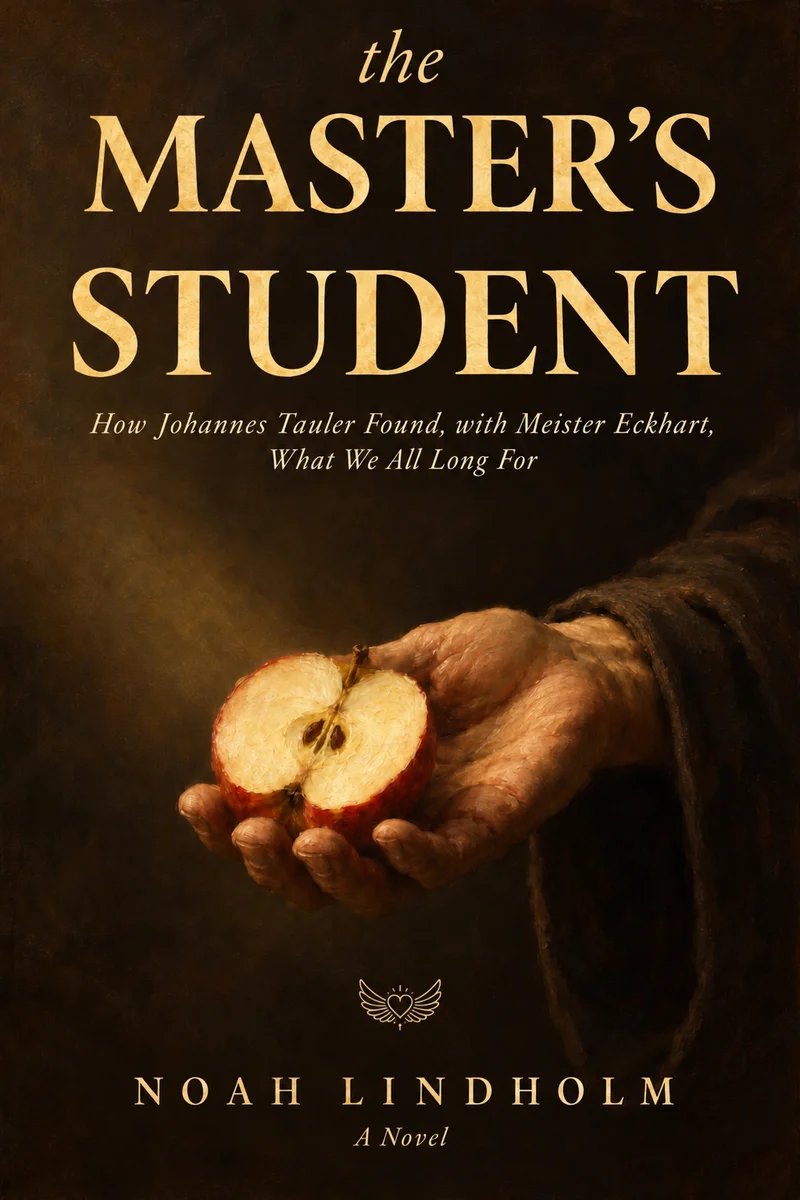
In The Master’s Student, an old friar gives the bigger piece of an apple to a hungry boy. Sometimes the most mystical act of the day is a small kindness no one else sees.
The evening question.
Before sleep, one question: Where did I feel close to something larger today? Not to judge the day, only to notice. If nothing comes to mind, that is fine too.
Reading slowly.
A page of Julian, a sermon of Eckhart, or a chapter of a novel, read slowly enough that a sentence can stay. Many readers find that one line carries further than a whole book read in a hurry.
If any of this feels like too much or too strange, it can be set aside. The mystics themselves said that the way looks different for each person.
Common questions
Questions and answers
What is mysticism in simple words?
Mysticism is the experience that the divine, or the deepest reality, can be met directly and not only believed in. It often shows up as a brief sense of presence, peace, or connection that is hard to put into words.
Do I have to be religious to explore mysticism?
No. Many of the classic mystics were Christian, but their questions about presence, letting go, and love are open to anyone. Many people who are spiritual but not religious find a home in their writings.
Who are the best-known Christian mystics?
Among the best known are Meister Eckhart, Marguerite Porete, Johannes Tauler, Julian of Norwich, Teresa of Ávila, John of the Cross, and Brother Lawrence. Each of them wrote about meeting God in a direct, personal way.
What did Meister Eckhart teach?
Eckhart taught that God can be born in the soul, and that the way there is letting go, even of fixed ideas about God. He preached in German to ordinary people. Some of his sentences were condemned in 1329, after his death.
Who was Marguerite Porete?
Marguerite Porete was a Beguine who wrote The Mirror of Simple Souls, a book about a soul that becomes free by wanting nothing more. She was burned in Paris in 1310, and her book survived anyway.
Is mysticism the same as meditation?
Not quite. Meditation is a practice, and mysticism is more an experience or a way of seeing. Practices like meditation, contemplative prayer, or slow reading can prepare the ground, but the mystics say the experience itself is received, not produced.
Can a novel help me understand mysticism?
Often, yes. A story lets you walk beside someone who meets these questions in a real life, with doubts and setbacks. That can make old ideas feel less abstract than a textbook does.
Is The Essence a novel?
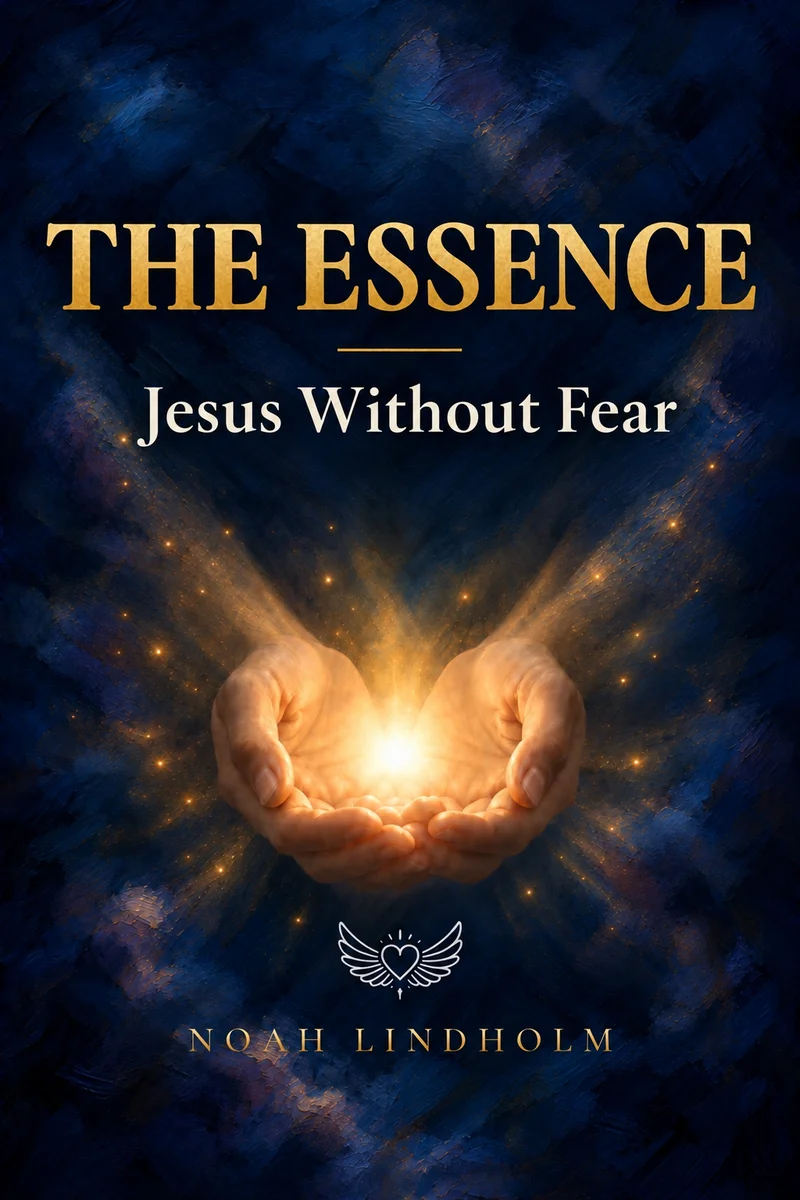
No. The Essence is a spiritual nonfiction book by Noah Lindholm. The other three books on this page are novels.
Where should I start?
If you like history, The Master’s Student or The Soul That Wanted Nothing More are good first doors. If you like big questions under a starry sky, try Where God Begins. If you want a direct, personal text, start with The Essence.
Keep reading
Four doors into the same quiet room
These books by Noah Lindholm do not explain mysticism. They tell its questions as stories and as a personal text.
Cologne, 1322. A young Johannes Tauler arrives soaked from the rain and meets an old friar peeling an apple for a barefoot boy: Meister Eckhart. Instead of lectures, the teaching comes through gestures, a garden, a cup of tea. Maybe a door for anyone who has found the mystics intriguing but their books locked.
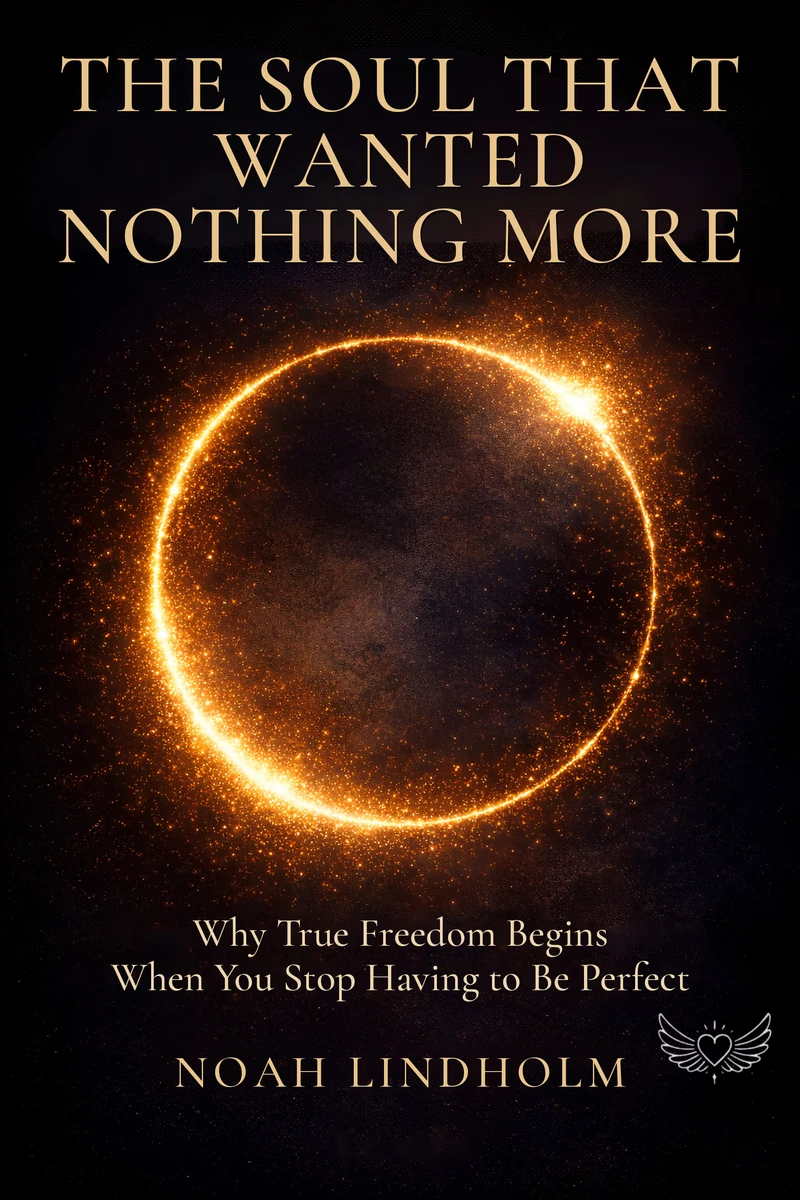
One charred page from Marguerite Porete’s burned book travels through the centuries and reaches four people: a Beguine, a friar, a modern coach in Berlin, and a woman in a city of the future. The novel asks what it might mean to want nothing more, and what that freedom could cost. Quiet humor included.
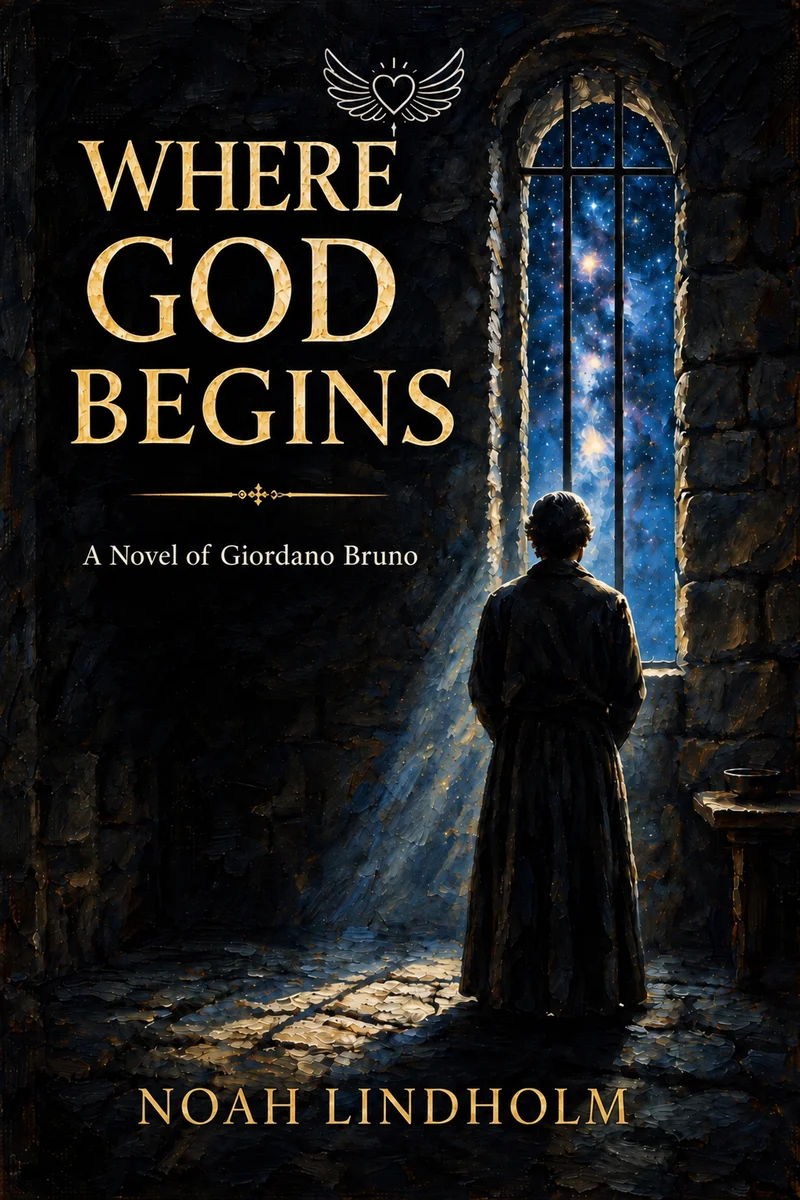
Rome, 1600: Giordano Bruno waits in his cell with a strip of sky the width of a hand. Munich, today: a cosmologist whose life feels like paperwork. Two stories that never meet and still turn out to be the same. For anyone who has looked at the stars and suspected that the divine is not far away.
Not a novel, but a love letter written in the first person from the voice of Christ consciousness. The author writes as a scribe and invites readers to keep only what frees and to set aside what frightens. Perhaps a door for anyone who loves the teachings of Jesus but feels uneasy with fear-based religion.