
Noah Lindholm
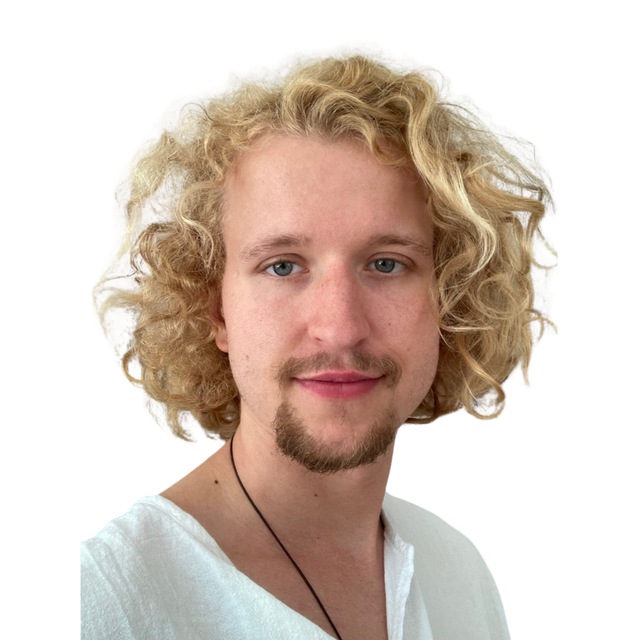
I write novels for people who feel a lot, think a lot, and often still carry some pain.
Noah Lindholm is a pen name of Markus Dirksen.
For people who keep everything running, yet sense that this can’t be all there is.
My path
My path didn’t begin with answers. It began with questions. With an inner emptiness, with doubts, with things that broke, and with a quiet longing for something real. For a life that feels true. For a love that stays.
Over the years I searched in many places: in books, in faith, in achievement, in insight. And at some point I understood that the deepest truth is often the simplest one. Love is not a goal. It is the way.
What I write
I write books that don’t lecture. They keep you company. Stories that don’t explain so much as remind. Words meant to feel like a quiet conversation, at the right time, with the right people.
Most of my books are novels. Some read like modern fables, some follow the mystics, some stay close to an ordinary life on an ordinary Tuesday. One of them, The Essence, is spiritual nonfiction. They invite you to question old beliefs, to let go of guilt, to learn to trust again and to come closer to yourself.
What I love most is telling stories. A self-help book can explain an insight. A novel can bring you so close to an experience that the insight forms inside you. The main character walks a path in your place, one that might take you years. You watch this person, feel with them, get annoyed with them, see yourself in them. And maybe at some point you notice that somewhere in their story, you began to see your own life with different eyes.
What drives me
What drives me isn’t success in the usual sense. It’s impact. When a reader says, “I felt seen.” When someone softens again after years of being hard on themselves. When a book reaches the right person at the right time.
I don’t believe in rigid dogma. My religion is love. A love that connects instead of dividing, that heals instead of judging, and that is bigger than any single worldview.
That’s why part of what my books earn goes into a game that helps bring more love into the world. It’s free for everyone. Right now it’s being tested in German, and once the test phase is over, it will be available in English too.
“Love is not a goal. It is the way.”
Books that keep you company
Everything I publish in English appears as Noah Lindholm. Stories meant to change something in you while you read.
- The House at the Edge of Eternity, with beta readers right now
- The Man Who Waited for His Life
- One Day Is Today
- The Soul That Wanted Nothing More
- A Moon in His Shoes
- The Essence (working title), spiritual nonfiction
- Where God Begins (working title)
- The Gift
The long interview
About writing, about receiving, about failing, and about the books, films and videos that shaped me. Open whichever questions interest you.

With a book from my school days. I noticed how much I could take away from a single book, and I just kept reading. That led me to a coaching program, and there someone recommended “The Secret.”
In it was this example: you write something once, and then you can pass it on a million times. It set something off in me. Back then I was already writing short reflective pieces and kept a document with my insights and favorite quotes, really just for myself. At some point I thought: I’ll pass this on so others can use it. That was the beginning. It took me years and many detours to find out that stories are what I really want to write.
There have been periods when books simply flowed. I didn’t write them in the usual sense. I received so much that I could hardly keep up with writing it down. I could literally feel the energy rising along my spine. Those were sacred moments. Often I wrote with my thumbs on my phone, in the notes app, because the inspiration came unexpectedly and my phone was all I had with me.
And it still happens today. Books like The House at the Edge of Eternity or The Essence sometimes came in the middle of the night. Then I get up and start writing. Books like that come extremely easily to me.
For a long time I only read nonfiction. Then I discovered the novels of the German author Bodo Deletz and realized that knowledge in the form of a novel is much more accessible. A story lets you experience knowledge. Our subconscious thinks in images and emotions, and stories are exactly that. It goes much deeper and is far more emotional. Knowledge has always been passed on through stories.
Many things simply don’t exist as novels yet, and that’s exactly what I’ve taken on as my task. Hard-to-understand texts by mystics, for example, became novels: The Soul That Wanted Nothing More and Where God Begins. With The Essence, it mattered to me to write a book about the teachings of Jesus that is only about love. Not about guilt and punishment, I never could relate to that. Just the core, what truly came from him.
Yes, and I do it quite deliberately. Some books I wrote to deepen my own trust in life. Writing a book is something very different from just reading one. The growth that happens in me while I write is worth the effort, even if the book never becomes a success.
Not even close. The published books are only a fraction of the ones I’ve started. There’s a clear difference I first had to learn: books I receive flow. Books I construct with my head become sluggish at some point, and I had to abandon some of them because writing them became too exhausting.
Sometimes the cover is finished, the whole concept is in place, the book is half written, and suddenly I notice: this is boring. Most recently that happened with a Buddhist novel. A beautiful cover, but the tension was missing, and I would have had to force myself. When I have to force myself to write, the reader can feel it. So there are real treasures sitting on my hard drive. And my list of ideas is so long that it’s often more likely I’ll write a completely new idea than one from the list.
For me there’s no line between work and life. Writing is my job, my hobby and my calling all at once. When they’re the right books, writing gives me energy instead of taking it. Sometimes I work from early morning until late at night, until my body gives out. Then I need to slow myself down and remember to move enough and not sit at the laptop for too long. When I’m standing in a line somewhere, I sometimes keep writing on my phone.
What many people underestimate: a large part of my time goes into marketing. Search engine optimization, running ads, reworking product pages, working in reader feedback. That’s as much a part of it as the writing itself.
A bigger one than people might think, and I’m honestly grateful for it. A good editor used to cost me several hundred euros per book, and the programs I tried didn’t catch nearly all the mistakes. Today AI helps me with editing, with translating, with covers and with product images. Without it, I couldn’t afford to publish the way I do. You could say that readers partly have AI to thank for some of these books being in their hands at all.
And it’s my sparring partner. I receive an idea, often with a clear picture of the novel already, and then it’s a back and forth, a brainstorm. When I get stuck, that gets things moving again. On top of that, I now have a fixed structure, a template document where I know exactly what goes where. Together, both have made me much faster at writing. The writing itself, the receiving, the soul of the books: that stays mine.
I like to be open about this, because many people have the wrong picture. Some see the professionally marketed books, think a lot of money must be coming in, and promptly want to sell me something. The reality of self-publishing looks different. Right now my books sell about 400 to 600 copies a month. That sounds like a lot, but advertising eats up much of the margin.
On top of that, Amazon only pays out after about two months, but the advertising is charged after half a month. So I pay for everything up front, and that took courage at the start. But that courage, putting real money on the line for the first time, changed everything. Only then were the books found at all. Since then it has been growing steadily. It’s only because of the digital world that people can find my books while I sleep. I’m deeply grateful for that.
The most honest answer first: write a review. As an author I truly depend on reviews. If a book doesn’t have enough reviews, nobody buys it. If nobody buys it, nobody finds out how much it can give, and then nobody reviews it either. This circle can only be broken together. That’s why I invite beta readers for new books. If you’d like to read a book before anyone else and tell me honestly how it lands, you’re very welcome to join the beta readers.
A great deal. It reaches me through reader surveys, through reviews and sometimes directly by email, and every time it strengthens me. When someone writes that a book moved them to tears. That it resolved a family crisis. That a novel took them further than forty years of nonfiction before it. Or when someone tells me they have read every book by Noah Lindholm.
And every book sold shows me: here is a person who is willing to grow. Who is in the middle of changing something inside. That alone makes the world a little better. Seeing that is the most beautiful part of it all for me.
Funnily enough, I always tend to recommend the latest one, because that’s the one I remember best. If I sort honestly:
The House at the Edge of Eternity belongs at the top. I completely understand why it’s one of my best-selling books in German.
The novels about the mystics, of course: Where God Begins set off a transformation in me just while I was writing it, and The Soul That Wanted Nothing More is, for me, the essence of everything I’ve ever read about enlightenment. The Essence can transform a life. If you keep putting your life off until later: The Man Who Waited for His Life. If you wonder what one small choice can do: One Day Is Today. And if you judge others quickly, or are judged: A Moon in His Shoes.
As a rule: I stand fully behind every book I’ve published as Noah Lindholm. There isn’t one among them that didn’t give me a lot myself.
A book is often the collection of many years of an author’s insights, and of everything that author has read. In a way it’s centuries of condensed knowledge that you can read in a week. I still find that astonishing, and it still fascinates me.
“Conversations with God” gave me an incredible amount. I wanted a book called “Everything You Want” because a woman told me she had given it to a homeless man, and that it had helped him get off the street. The novels by Bodo Deletz about happiness showed me that knowledge goes much deeper as a story, and “Sara and the Owl” belongs here too. “Way of the Peaceful Warrior” is one of my favorite books as well, just like “2020: The New Earth,” which is available as an audiobook on YouTube.
And then there are videos that strictly speaking aren’t books but shaped me just as much. “You Are Not Alone: A Gathering of the Tribe” gives me goosebumps again and again. “The Egg” by Andy Weir is one of them too, a short story that turns the whole universe upside down in a few minutes, and a video about the life review as described by Elisabeth Kübler-Ross. But one book stands above all of them. More on that right here, with my favorite book.
Ami, Child of the Stars
This is the book I recommend to truly everyone I meet. It’s about love, and it reminds me of what’s possible: of love itself, and of a more highly developed civilization that lives by it. It’s very much a book for adults too, and I listen to it again and again.
My life is made of moments like that. One example: I had bought a sofa bed from someone, and he wanted to stay in touch. He suggested a trip to Hamburg, then canceled at short notice, and I went alone. There I felt it: I want to live in the big city. It became one of the best decisions of my life, because I was able to grow so quickly there.
In my first furnished apartment there were old books, all printed in old German script that I couldn’t read. The only readable one was called “Karma: Why Is This Happening to Me?” My inner voice said: this is no coincidence. Through a YouTube channel I found out about a regular meetup in Hamburg and got to know people there. At some point we threw a party in the city park, and there someone told me about a massage circle. Through that circle I heard about the New Healing Festival. I found the courage to go, and gave a talk there about love, from a book of mine that wasn’t finished yet.
Through that one talk I met one of my closest friends today, then his group, later my shared apartment, my closest friends and finally my girlfriend. One single chain of guidance, and at the start there was only the courage to go and talk about love.
Very much so. The New Healing Festival changed my life, and during the week it’s a beautiful place with a very special energy. I can also wholeheartedly recommend the Cat and Cow Festival. When I’m at a festival, I sometimes offer small workshops on the spot, simply because the moment calls for it. Some of my deepest connections came from moments like these.
With people I met that way, I even traveled to Ukraine. And although the country was at war, I experienced one of the deepest inner peaces I know there. It was magical, and it showed me that peace isn’t a state of circumstances. It’s an inner state.
Films can do the same thing novels do: let you experience knowledge. My favorite films are “La Belle Verte,” “The Film of Your Life,” “Nosso Lar,” “Cloud Atlas,” “The Matrix,” “Peaceful Warrior,” which I also love as a book, “Interstellar,” “Soul” and “Mr. Nobody.”
Plus two that are more experiences than films: the “Samadhi” film and “Life After Life.” Look closely and you’ll see they’re all films about consciousness, about the question of what is real, and about the love that connects everything.
It was a rough start. I was born not breathing, strangled by the umbilical cord, and had to be resuscitated. Whether that did something to me, I don’t know. But as a child I was always different. While all the other boys were into cars, I was fascinated by plants. To me they were pure magic. I was also bullied, although what I went through is small compared to what others have had to endure.
Back then I volunteered for military service, not out of conviction for the military, but because as a child I dreamed of learning to survive outdoors. It turned out completely differently than I expected. Since then I have applied for conscientious objector status, because I don’t believe war is a solution.
The next project in my series about the mystics is already decided: a book about the life of Meister Eckhart. I’ll publish several more books about the mystics, and readers are already writing to me to say they’re looking forward to them.

One writer, a little help
I write the novels myself, and the English editions were translated with the help of AI. Your message comes straight to me. So whether a book gets found depends on readers, not on an advertising budget. If you’re wondering what you could do: an honest review on Amazon helps more than almost anything else.
Leave a reviewFollow Noah Lindholm on Amazon
Amazon itself lets you know as soon as a new book comes out. Free, and you can unfollow anytime.
If you’d like to hear from me directly, join the Reader Panel. More on the page Follow on Amazon.
The books that grew out of this path
Maybe something brought you here. A sentence. A feeling. A quiet sense that there could be more.